FLOw for AsTrophotography
FLOAT
FLOAT is software for processing deep-sky images, from the raw frames to the finished image. The processing is built block by block, as a graph: calibration, registration, selection, stacking, astrometry, sky background, colours, denoising, star separation, then retouching with layers and filters. Each block can be opened, adjusted and run again; only what follows a change is computed again. A workflow can branch from any block of another, to compare two settings or two methods on the same frames.
Every method is a published one, cited in the interface next to its settings: drizzle stacking from the raw pixels, a colour balance measured on the Gaia spectra of the stars in the field, denoising between two independent half-stacks. Every automatic value comes with the reason it was chosen. Each project has its report, which says what was taken, what was measured and what was done. The frames can come from a DSLR or mirrorless camera, a one-shot colour camera or a monochrome camera with filters. Licence: GPL v3.
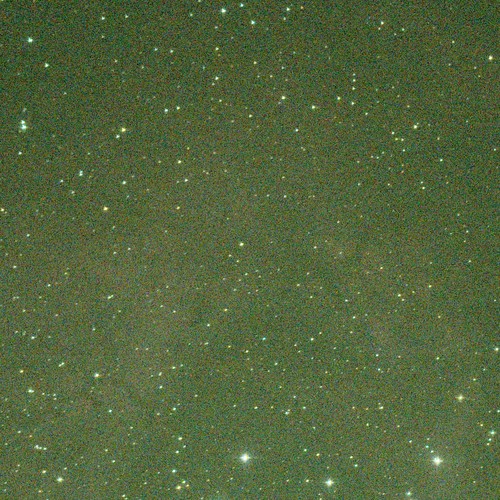
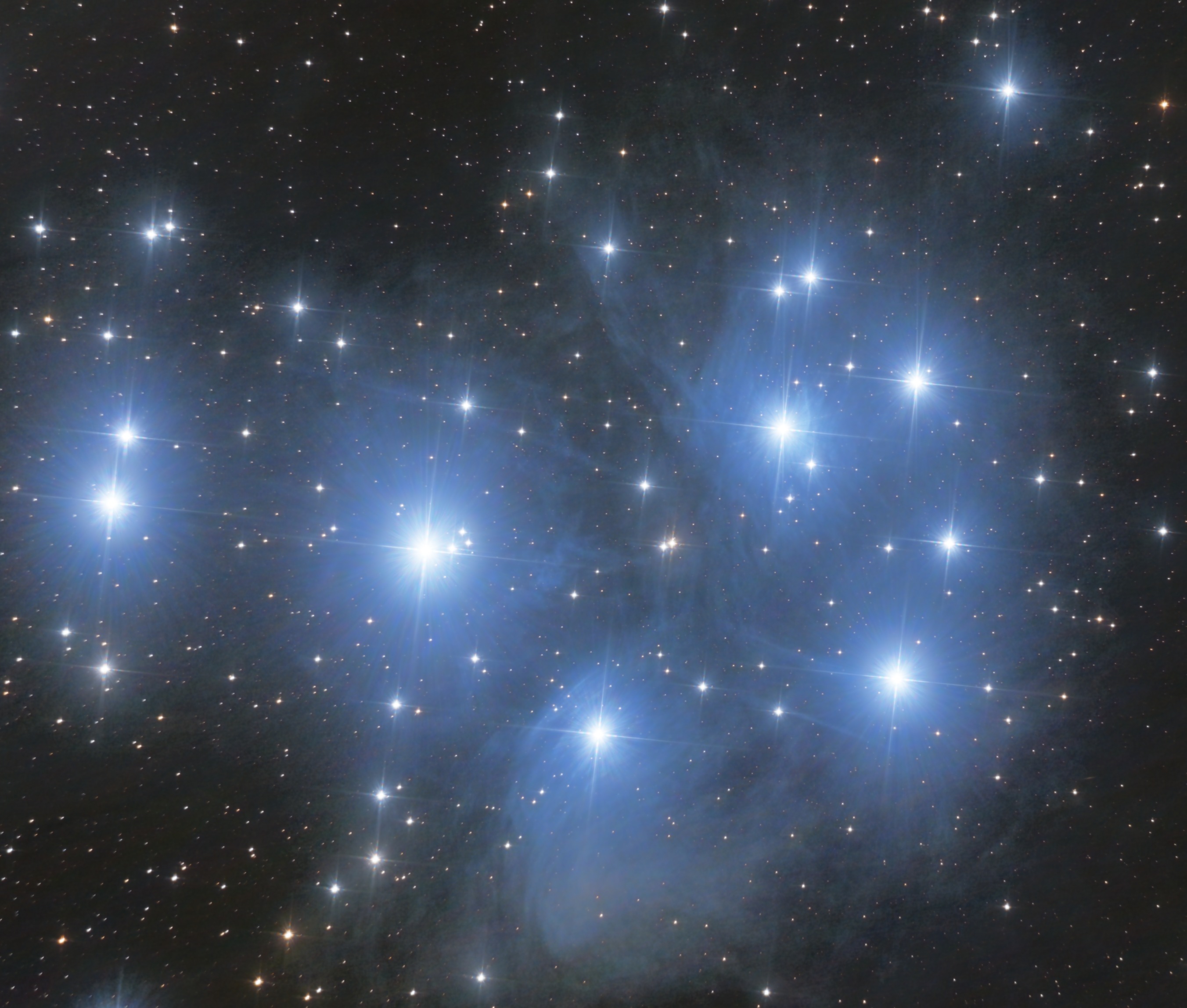
(a) raw frame, 15 s
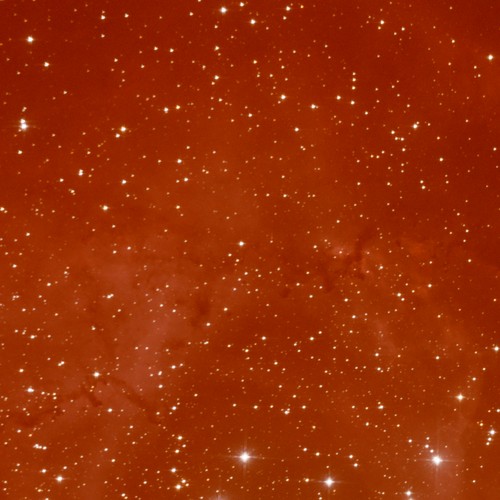
(b) stack, 435 frames
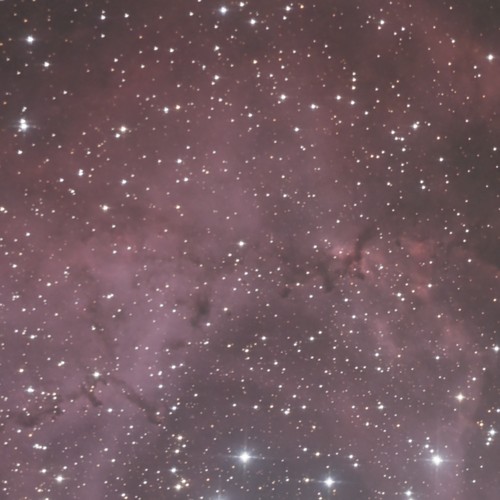
(c) processed, linear
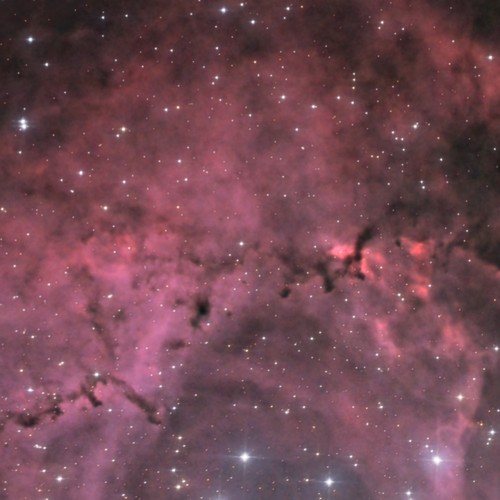
(d) finished image
1The processing graph
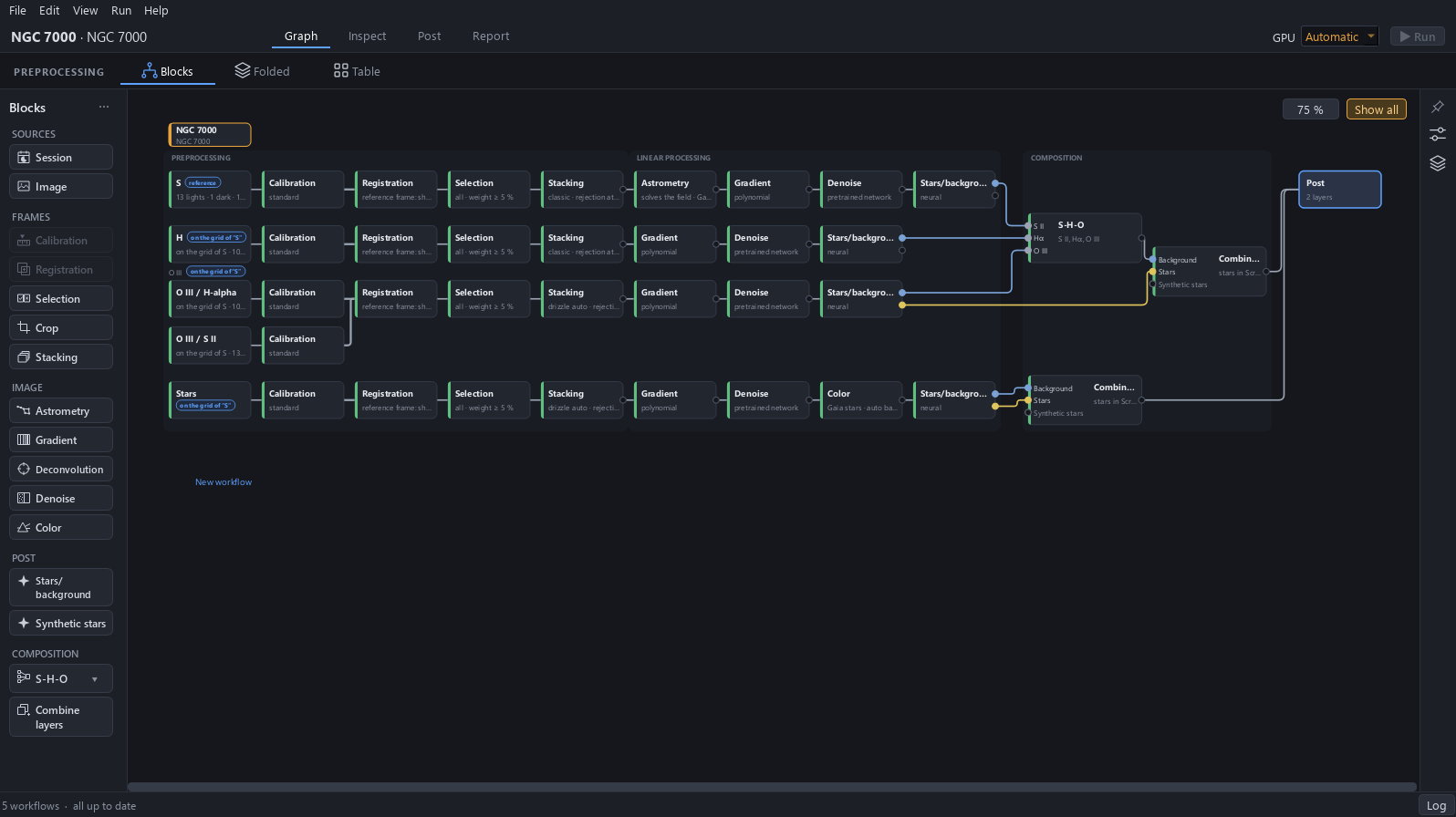
Each step, from calibration to post-processing, is a block, and the chain is drawn as a graph.
Below, a replica of the Graph page and of Post, guided step by step. Nothing is computed here; the names, actions and states are those of FLOAT.
Blocks
Sources
Frames
Image
Post
Composition
Layers
Properties
The blocks of a typical chain, from calibration to post-processing:

2Several workflows on one graph
A workflow can branch from any block of another, to try a different setting or method. The branches meet in Post, as versions to compare or as layers to combine.
3Post
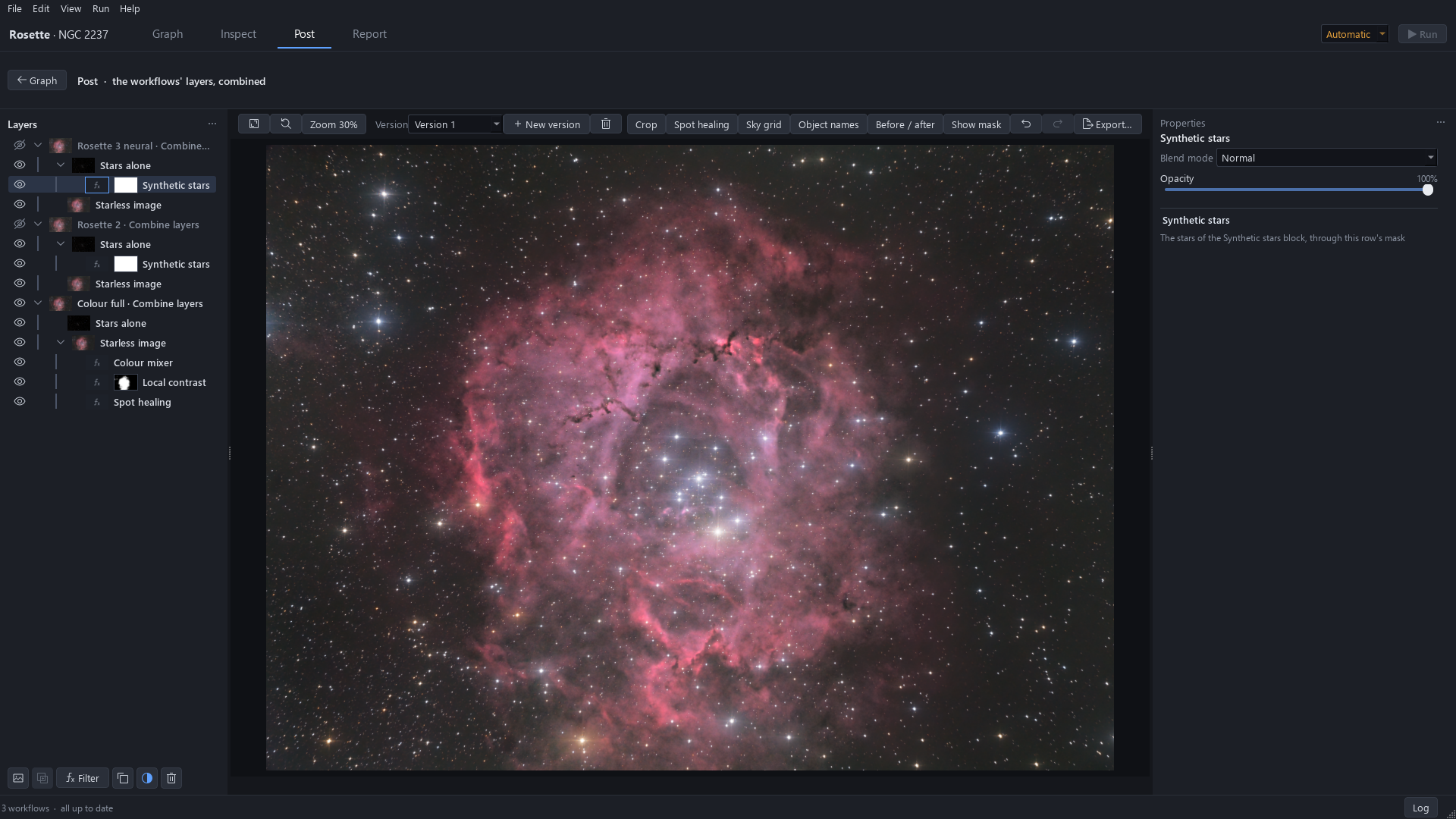
Post follows the layer model of image editors such as GIMP.
- Layers, masks, blend modes, opacity. Each workflow’s image, and any block’s result, can be a layer.
- Non-destructive. Each adjustment is a filter on its layer, which can be switched off, changed or removed on its own at any time.
- Tools. Curves, arcsinh stretch, local contrast, multiscale sharpening and noise reduction, colour, crop, spot healing, and several versions of the same edit.
4Methods
Each block’s page details its method, settings and limits: see Blocks.
| Block | Method | Reference |
|---|---|---|
| Registration | Shift by vote on star positions, then a cubic polynomial; triangle matching for large rotations and sparse fields | Triangles: Groth 1986, AJ 91, 1244; Valdes et al. 1995, PASP 107, 1119 |
| Stacking | Drizzle from the raw colour pixels, without debayering | Fruchter & Hook 2002, PASP 114, 144 |
| Astrometry | First solution by Asterion, else FLOAT’s own search (blind solving after Astrometry.net); fine fit on Gaia DR3 | Astrometry.net: Lang et al. 2010, AJ 139, 1782 |
| Color | Photometric white balance on the Gaia XP spectra of the stars in the field: one factor per colour | Montegriffo et al. 2023, A&A 674, A3 |
| Denoise | Noise2Noise between two independent half-stacks | Lehtinen et al. 2018, ICML |
| Deconvolution | Richardson-Lucy with the handling of saturated stars, or a NAFNet network (beta) | Richardson 1972; Lucy 1974; Whyte et al. 2014; Chen et al. 2022 |
| Stars/background | A NAFNet network on the linear image: the starless image and the stars alone, which add up to the image | Chen et al. 2022, ECCV |
| Post | Arcsinh stretch, guided filter, wavelets, CLAHE, spot healing | Lupton et al. 2004, PASP 116, 133 |
5The report
Each project has its report, laid out as a short scientific report: what was taken, what was measured, what was done. It serves to understand the image and to know which processing was applied to it: the acquisition sheet, the star size and the sky level of each frame through the night, the values measured by each block, the settings changed. It is exported as a PDF or a PNG, with no path and no folder name, to be kept with the project or published with the image. The Report page describes it section by section.